What is attention-seeking behavior?
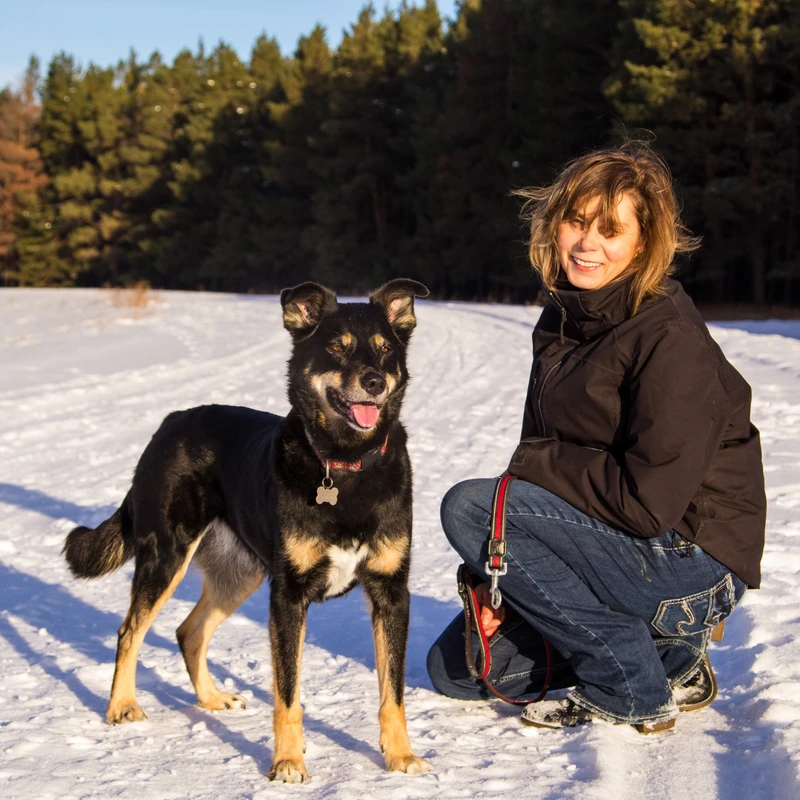
According to the American Kennel Club and several other sources of information on the web, it is any action a dog performs to get a human to notice them. This can include barking, whining, jumping on you, pawing you, or mouthing you with their jaws—anything that captures your attention and has the potential to become nuisance behavior.

Here is the problem I have with that statement.
It describes attention-seeking as a negative experience only, and in doing so, it does a disservice to our dogs.
After working with hundreds of puppies and dogs in clients’ homes since 2020, I have developed a clear insight into why this perspective is wrong—and because it is wrong, it often leads to poor advice on how to handle these behaviors.
What behaviors are we actually talking about?
Here is a list of behaviors that I have personally observed being labeled as attention-seeking:
Chewing on furniture (the most recent call I received)
Stealing socks, Kleenex, oven mitts, remote controls, cell phones, dentures, shoes
Chewing on plants, sticks, rocks, mitts
Jumping on humans, both on walks and at home
Jumping on guests
Barking at dogs or people
Chasing cats
Eye contact
Sitting on a mat
What can Attention-Seeking look like?
Here is one example of what it looks like — working with a client and her puppy.
We started Ned’s training in the kitchen — introducing sits and downs for treats. Ned thought this was great. But after a few minutes, the humans became distracted because the coffee was ready. Little Ned was not interested in coffee, so he went over to the entrance mat and started to chew on it. His person immediately got excited by this behavior and went over there to stop him.
Ned, the puppy, understood he needed his human’s attention to keep the treat - training going and his solution was actually quite brilliant.
He does not know why that mat has any value to the human; what he did know was that if he interacted with it, she would engage with him.
‘Focus is the start of everything’
Every single dog class that I teach or have attended for the last 40 years, and every single dog training book, has this exercise as part of your training - FOCUS.
And that is exactly what attention-seeking behavior looks like; it's an attempt by the dog to get you to “focus” on them. They are aware that they need you to make eye contact with them in order to get access to something.
Dogs will do this very thing to other dogs — they don’t offer a play bow until the other dog is looking at them, which may have them barking at the other dog to look at them first.
Do you see the confusion?
On one hand, we struggle to get our dogs to pay attention to us when we want something, and then we are taught to ignore the puppy at other times when they are trying to get our attention.
To better understand how to fix it, we need to see how it starts.
Where Attention-Seeking starts?
Puppies have several different behavior phases prior to 6 months of age. These are my classifications based on the hundreds of puppies I have worked with and the research I have done.
Social phase — 5-16 weeks - this is where they develop a secure, healthy attachment to the human. Any attention-seeking behaviors should be considered thoughtfully, to ignore a scared puppy undermines your relationship.
The everything-goes-in-their-mouth phase — is it or is it not food? 8-16 weeks
The bitey phase — sharp puppy teeth 8-16weeks
The chewing phase — after the puppy teeth start to fall out.
The “hey, look I see other dogs and people” phase — the hormones start to change.
All this happens prior to 6 months.
During the everything-goes-in-their-mouth phase, the question you can see over their head in a little thought bubble is: “Is this food? Is this not food?”
They are tasting and testing. They taste the rocks, they taste the sticks, they taste the shoes, and their guardians react — “GASP! He is going to choke on the rock!” — and they dive into the dog’s mouth and take the rock out.
From the puppy’s perspective, we have increased the value of rocks by our sudden attention.
Observe the puppy a little closer, and you can see the puppy’s curiosity as they sniff the ground around the place they picked up the rock. They might even pick up a second rock.
And the human dives in again.
Now we have a problem.
I have seen this with mushrooms (the owner was worried about a poisonous mushroom), house plants, kids’ socks, the shoes left at the door — even the licking and chewing of human hands can cause a big gasp as the owner’s personal fears shine through.
We unintentionally created value in those items, as we dive into their personal space and remove the item. But like NED with the front door mat, it also is a way to get the human to engage with them. FYI - the mat was eventually removed.
How do animals learn in the wild what is or is not food?
Often the adult animal will leave presents for the pups, or kits, to explore and play with. These are bits of dead animals — maybe a dead rabbit or mouse — and the young play, taste, and explore these items.
For our young pet puppies, this behavior is an extension of who they are as an animal and because puppies have this ‘socialization window’ they extend this behavior to the humans in their social circle.
We take off our shoes, and they curiously sniff and inspect — maybe lick, maybe attempt to chew or bite those $200 Nikes.
The humans dive in and gently, kindly say “NO,” and then they leave the “food” — I mean shoe — there. And the puppy goes right back. The thought bubble would read ‘Shoes are important for life’?
Finally — Anticipation, Expectations, and Frustrations.
Having established that our puppies learn from us, even when we may not mean to be teaching them anything. What happens when we do teach them things?
When our dog Sydney was a puppy, we taught him that sitting or laying on his mat in the kitchen was the place to get rewards. Anytime he was in the kitchen and chose to settle on the mat, we rewarded him with something delicious — maybe a broccoli crown or a piece of chicken.
It didn’t take long for him to learn and soon he would choose the mat, waiting in anticipation for a piece of something — expecting something — until finally he got frustrated with waiting and barked.
He was doing everything right. We had done everything right.
Should we just ignore him?
Anticipation is an important part of our training - we build that anticipation for a reward teaching the dog what behaviors will get them the reward - soon - the dog learns what behaviors to do to get those rewards. Brilliant! You are doing everything right. Then there is a moment when your dog who is doing the right thing - gets frustrated and with frustration comes a little burst of arousal and they will do a very dog like thing - such as bark.
What 'Not'
to Do When Your Dog Seeks Attention
The advice on the internet runs rampant with things like:
“While you’re teaching your dog alternative ways to communicate their needs, you shouldn’t reinforce the problem behavior. That means ignoring all your dog’s attempts to capture your attention. But you have to be fair.”
Ignoring bad attention-seeking behaviors makes it worse.
I had a lovely dog named Sugar come live with us for a while - her idea to get the humans attention was to ‘steal stuff off of the counter’ - then push the item at the human, and when that didn’t work, she resorted to nipping and biting. Was she aggressive, nope. Just wanting my attention.
Turning your back until the dog stops jumping or waiting for your dog to stop ‘demand barking’ only forces the dog to escalate in their attempts to get your attention.
What to Do When Your Dog Asks for Your Attention
Give them attention — For Sugar I started teaching her several things - Settle was one - but in that moment - we asked her to do one behavior she knew - SIT or DOWN or Nose Touch and then got up and played with her for a minute - we repeated this never asking for the same behavior twice in a row and eventually Sugar just stopped asking to ‘play’ and began to listen.
It's so simple, and yet so powerful.
Attention seeking barking in a class setting - I often will see a dog barking at a client in class - the dog sitting nicely in front of the human. Waiting for… a food reward. The human often not wanting to be the center of attention - quickly stuffed a treat in the dogs mouth. The answer in a class setting is to ask the dog to do something else then reward. Now you are rewarding listening.
Teaching a 'no-reward' MarkeR
A no-reward marker, or cue, tells the dog that this is not the right behavior—it adds information to your training.
The issue is how we go about it.
Just saying “no” does not provide any information.
Ignoring them could be considered a “no,” but it does not teach them anything.
Instead, it can make them even more frustrated.
Serving treats like Grandma!
I like to introduce the No in other ways that are not part of the moment I need it. In class we play a game, called Serving Treats Like Grandma.
Once we have taught the dogs to sit for a treat. We begin to practice serving the treats like Grandma. With a shaky hand, and a slow approaching treat we reward the dog for remaining seated. Invariably the young dogs struggle with their patience, and will often jump at treat in the hand. The students say a calm ‘nope’ and tuck the cookie hand behind their back for 1- second - Do Not keep it behind your back.
Bring it right back out and show the dog the treat again and begin the slow, shaky approach, building that anticipation. We give them a few wins where we might reward them for remaining seated - especially for those really impatient dogs.
But the real training happens in that moment when they jump and cookie goes even further away (not higher). Soon the dog learn that SITS actually make the food come closer. Even when it's Grandma giving them a treat. But we have also started to implement the No-Reward Marker.
Here is another life example of a No-Reward Marker
Our German Shepherd loved to bark for attention.
In our quiet moments, when he asked for pets by pawing gently at my arm, I would scratch his chest, then stop, and he would ask again. We would do this 3 times before I would say, “ALL DONE, go lie down.”
He always asked one more time to be sure I meant it before sighing and going to his spot and laying down.
All-done cues, wait, stop-sign hands are great additions to your training — a shut-off to when your dog asks for more when you are done - a no-reward marker.
Clear Communication
One of the big issues with teaching a dog the no-reward marker is that we often lack understanding of what the dog is asking for in that moment.
We assume that our attention is the reward—but often it is more than that, and it requires some interpretation, because our dogs are not always clear in what they are asking for. Attention - Seeking is often just that an asking for something.
By giving them—not silence—but information, we help them learn.
Some things are simpler to see - a dog jumping up on the counter to get closer to the food - may have you gently pushing the food further away - Nope.
A dog barking to come inside - answer it - but add in Suzanne's Puppy Politeness Protocol.
But a dog that is desperately excited to see you when you come home—turning your back is not the solution. Instead, put down your bags and prepare to to teach him, and my favorite for this - short successful pets.
MANAGEMENT and Enrichment
Finally, always consider what you can do to manage the dog from doing a behavior you don’t like - until you can teach them what you do like. For puppies, it might be putting your shoes away - or putting the area mat away - or having them in their own puppy area.
Meet the dog’s needs. - Enrichment games, walks, and positive interactions several times a day teach the dog what works and what doesn’t work.


