Connection in Motion: the art of walking your dog.
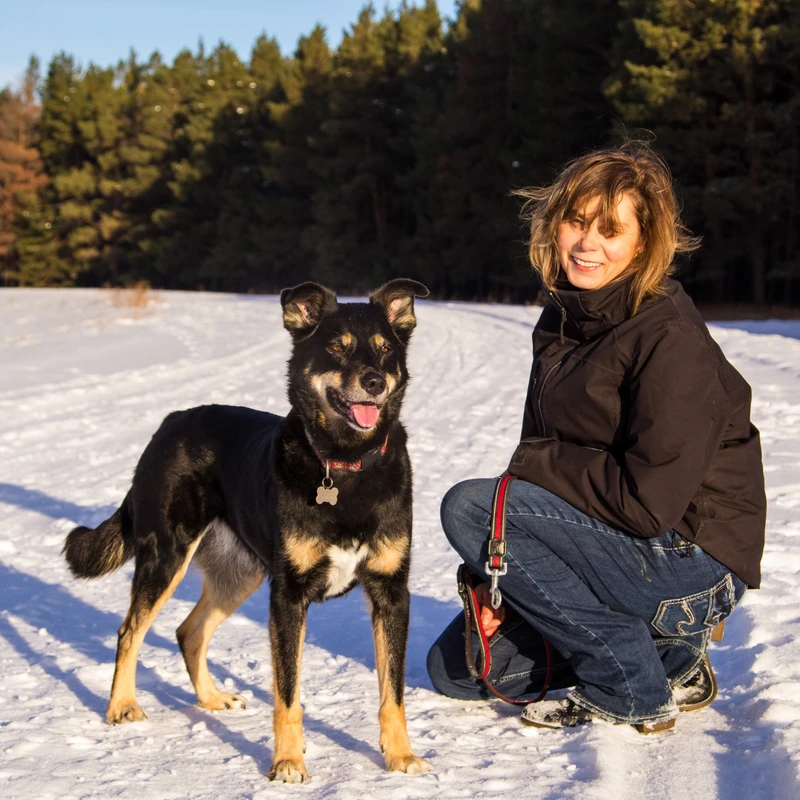

When you clip on your dog’s leash, what lesson are you actually teaching?
Most of us would say something like: Don’t pull. Stay close. Walk nicely. But if we slow down and look more closely, there’s a deeper question underneath all of this:
What does the dog understand about the leash—and about us—while we’re walking together?
We clip the leash on, step out the door, and expect our dogs to intuit the rules. Stay beside me. Follow along. Don’t drag me down the sidewalk. From the dog’s point of view, however, none of this has been clearly explained or taught.
And that’s where many walking struggles begin.
The Leash Isn’t Communication — It’s a Constraint
The leash, by its very nature, is a constraint. You can see this clearly with puppies. Put a leash and collar on a young puppy and apply even the smallest amount of pressure, and many puppies will instinctively back away, resisting the restraint. If you pause for just a moment, they may accidentally step toward you—and that moment is where learning begins.
Step toward pressure, and good things happen.
For older dogs, pulling may be the dog’s habit—or it may be the handler’s habit to keep the leash tight. This becomes especially clear when the leash is removed, or when a longer line is used instead.
With many of my clients, one of the first things I do is experiment: no leash in a safe space, or a longer leash outdoors. What often happens surprises people.
Dogs that appear “bad on leash” suddenly soften. They slow down. They stay closer. Not because they’ve been trained differently—but because the constant pressure is gone.
Space Creates Choice
Consider a large dog on a four-foot leash. That leash tightens almost immediately. The dog can’t lower their head to sniff without creating tension. There’s no room to make a good choice.
The leash is always tight—whether we intend it to be or not.
Sometimes, simply giving a dog a bit more space is enough. The leash loosens. Pressure disappears. And the dog stays nearby—not because they’re being controlled, but because they’re choosing to stay connected.
When the Leash Becomes the Message
I noticed this years ago with our dog, Max. Off leash, Max was remarkable. He responded easily to voice and gesture—a subtle cue was enough to call him away or direct him back. At the lake, spending time with family, he was often off leash and could be guided just as easily by different members of the family.
But one day, when Max was on his leash, I handed it to my brother—and everything changed.
The same person who could effortlessly call Max back or ask him to walk along suddenly found himself steering Max. Not asking. Not guiding. Physically directing Max with the leash itself.
The dog hadn’t changed. The communication had.
The Three Ways We Communicate on Walks
When we walk our dogs, we communicate in three primary ways:
The leash
Our voice
Our body language
Most people rely heavily on the first and the third—and rarely with intention.
One leash behavior I often see (and quietly cringe at) is the pop-pop: two quick leash flicks. Not enough to redirect the dog—maybe enough to get attention—but then what?
It’s like someone saying “hey” behind you, but every time you turn around, they say nothing. Eventually, you stop responding. Dogs do the same. Frustration builds. Leash pops escalate. Equipment changes.
Meanwhile, dogs are constantly reading our bodies. If our feet point forward, they assume we’re moving forward—and they forge ahead in anticipation. That works fine with a small puppy. It becomes a problem when the dog is sixty or eighty pounds and has learned, little by little, that pulling works.
Eventually, safety becomes an issue. And that’s often when people turn to stronger tools—not because they want to, but because they feel out of options.
Deliberate Communication: The Missing Piece

Most training happens while we’re standing still. Loose leash walking asks something different of us: deliberate communication once we’re in motion.
We’re comfortable using cues when we’re not moving—sit, down, stay. These cues are clear, familiar, and easy to practice. They tell the dog exactly what to do when everything is paused.
But walking doesn’t happen in stillness.
Walking requires ongoing information. It asks a different question entirely.
What tells the dog:
Stay with me
Check in
We’re moving together
When those messages haven’t been taught, dogs don’t stop responding—they improvise.
They move ahead. They lag behind. They follow their nose, the environment, or their own momentum. Not because they’re ignoring us, but because no one has shown them what connection looks like once movement begins.
Loose leash walking isn’t about holding a position. It’s about maintaining a conversation—one that continues step by step, moment by moment, as we move together.
Attention Comes First
Occasionally, you meet a dog who doesn’t need to be taught this. I once assessed a dog for therapy work who stepped out of the car, looked at his handler, and waited. No cue. No leash pressure. Just quiet focus. He walked beside her. He sat when she stopped. When I asked to pet him, he looked to her for permission.
She hadn’t trained this.
The dog simply found humans endlessly fascinating.
Most of us don’t start there.
Some of us had that attention once and didn’t nurture it. Others worked so hard—calling, coaxing, waving treats—that the dog never had to think. And some tried to force attention through fear or discomfort.
But attention can be built—through food, play, movement, timing, and teaching the dog that we are worth checking in with.
Once attention exists, communication becomes possible.
From Control to Partnership

That’s where real loose leash walking begins.
Not with pressure. Not with corrections. But with clarity.
Walking together becomes a conversation—not a tug-of-war. A partnership, not a power struggle.
Connection in motion is the goal.


